
For the past few months I've been reading and reviewing advanced review copies of books coming out this spring and fall. We aren't supposed to post about them until they come out since we don't read the absolute final form. Not realizing this, I jumped the gun and posted about the new Ann Patchett book mainly because I loved it so much.

Now, I'm waiting until I get the publishers' go ahead.

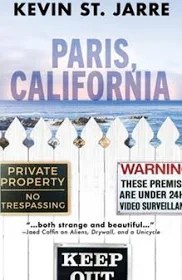
Paris California is the first and launched in May. I was hard on it and if any of my dear readers do pick it up and want to chat about it, particularly if they saw something in it I missed, that would be great...

There is a beach town in California called Paris.  Whether or not, any of the storyline was drawn from the real town doesn't add or detract from the story. Beach towns are experiencing these kind of dramatic changes of gentrification up and down both coasts.

I was very disappointed in this novel all the way through.  What can ruin a book is when a writer has a point to make that supersedes all the elements that can give a book depth and interest.  While I have no issue with the premise and political points author Kevin St. Jarre was making, the longwinded speeches and rush of destructive events did not serve the interest of the story.

Paris California is a small coastal town. There had been little change there for years. As in many small towns, Paris's mom and pop stores slowly went out of business.  However, the longterm residents were content, the beach was open to everyone, children played freely, the old carousel building was at its heart, and it had the friendly feel of small town America.

Suddenly, Paris is overcome by the rush of new wealthy residents willing to pay extraordinary amounts for the old houses. They want to change the character of the town by restricting freedom and the way of life that may have drawn them there in the first place.

At the center of the book is the relationship between an older, retired resident and a boy who has just moved in. Ashin Asilomar, a recently widowed, retired dentist, has a very mild personality and is content with his contracting life.  The boy, Matteo, is a lonely, recent transplant from Texas, with parents who let him be. His mother is the breadwinner. She can work from anywhere as a computer analyst who creates algorithms; his father is a former journalist who rages about what the world has become.

In the short time since Matteo has arrived, most of the houses have been sold to out of towners displacing the old residents who can no longer afford to live there, fences have cut off the beach, dogs are no longer allowed out of their yards, proposed new businesses and building further attempt to ruin the town.  The town council is, not surprisingly, ineffectual.

The characters are one dimensional which is a pity because there was much possibility. The obstructionists seem to be place holders, some farcical, as a way to forward the book’s agenda. The crazy men cutting off the beach, the woman who threatens law suits to put her restrictive ideas in place,  and the shallowness of the new owners could have potentially been developed. But, they remained stick figures.

While the relationship between Ashin and Matteo was needed to push the story forward, the dialogue between them felt stilted and untrue.

I think this writer has some good ideas that could make an interesting story if he set his soapbox aside and created people we cared about.

Kevin St. Jarre, Author
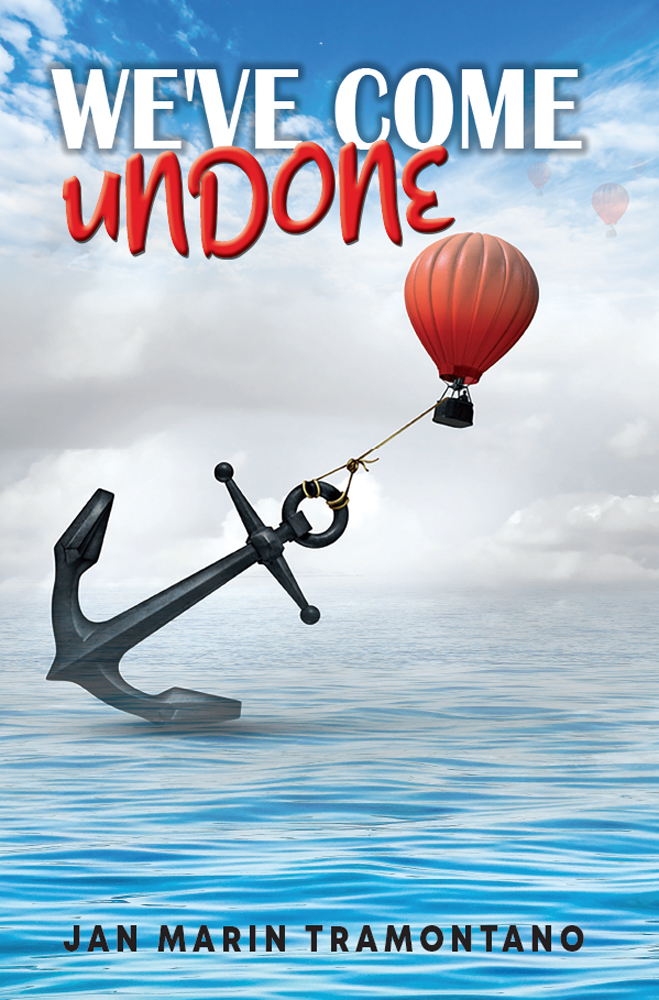
Available on this website, Amazon, Barnes&Noble and your local bookstore
Jan Marin Tramontano has given us a novel of love and disenchantment, of dashed dreams and sustained hope. Sexy, unflinching, pinpoint accurate in its portrayal of parenting, this is an exhilarating work.
James Robison, novelist, screenwriter, poet Recipient of Rosenthal, Whiting, and Pushcart Awards

“It takes faith to coax a plant/from root to bloom” and so too, Tramontano has coaxed poems from experience of the Holocaust, from betrayal and chipped bone china, and a mother’s failing memory. Here are poems of deep human feeling as told through the “luminous particulars,” as Jane Kenyon would say: wisteria and white-capped waves and the furniture left when the family house must be sold.
–Holly Wren Spaulding, Familiars
 Reader’s Cafe