
I am always amazed by what I learn from historical fiction and how it illuminates diverse perspectives and little known events. Given what is going on in the world right now, regardless of your personal viewpoint, fiction and poetry can make us think in a way we can’t get from other sources. Sure, the horrific images shown over and over inform us, but some writers have a way of making us expand our thinking.
Facts presented through the lens of a personal story is always an effective way for a reader to live through the trauma and find empathy and understanding beneath the glare of the news. Coincidentally two of the books I read this week are relevant to what’s happening in the world right now. One may be considered historical fiction because the traumatic events occurred fifty years ago but for many of us, it is in our lifetime. The other story is years new.
This is a quote from the prologue of Alif Shark’s novel, The Island of Missing Tree, one of the books I want to talk about today. The narrator is referring to Cyprus but it’s universal to anyone who has been forced to leave their home.

“It has been many years since I flet that place on board a plane…but not a single day passes that I do not yearn to be back. Home. Motherland.
It must still be there where I left it, rising and sinking with the waves that break and foam upon its rugged coastline. At the crossroads of three continents—Europe, Africa, Asia—and the Levant, the vast and impenetrable region, vanished entirely from the maps of today.
A map is a two-dimensional representation with arbitrary symbols and incised lines that decide who is to be our enemy and who is to be our friend, who deserves our love and who deserves our hatred, and who, our sheer indifference.
Cartography is another name for stories told by winners.
For stories told by those who have lost, there isn’t one.”
The books are linked by wars foisted upon a group of people who become refugees and the long reach that has on future generations.
The Island of Missing Trees spans multiple timelines, but is rooted in the 1970s Greek and Turkish conflict in Cyprus. It follows the love story of Greek Cypriot Kostas and Turkish Cypriot Defne, their emigration to London, and the impact of their past history and trauma on their daughter Ada. Their daughter has been totally shielded from their experience and has no relationship with either family. Her father, a distinguished botanist, only talks about their island in terms of its natural environment and the fig tree in her garden.
The fig tree is a narrator who provides muchof the back story. A reader may be put off by the story’s magical realism.I loved this. It was original and the voice gave texture to the backstory. Kostas, in his way, was not verbally expressive; Defne was traumatized by many of the events she witnessed, experienced and her many losses. The fig was a colorful storyteller and brought to life the rest of the cast—particularly Yiorgos and Yosef who were pivotal to the story. Meryem, Dafne’s sister, enlivened the story with all the cultural tropes.
I read one other book many years ago by this writer. It was called Forty Rules of Love. While I don’t really remember the storyline, I do remember how I loved the musicality of her writing. I would recommend checking her books out!
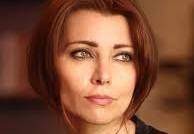
Coincidentally, although The BeeKeeper of Aleppo is ,of course, about Syrian refugees, the author, Christy Lefteri, was herself raised in England by Cypriot immigrants. With that history, she spent several summers working in a refugee camp near Athens when massive groups were fleeing the Syrian civil war. She fictionalized this experience intertwined with her own personal history in crafting her novel.
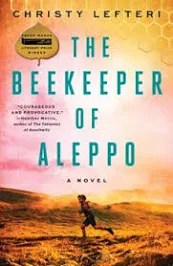
The Bee Keeper of Aleppo is the story of a couple forced to flee their beloved home during the Syrian civil war. Nuri and Afra lead a life in Aleppo rich in family, friends and work they love. They have a five year old son who is the center of life. Nuri, along with his cousin, Mustafa,are successful beekeepers and Afra is an artist. .During the bombing of Aleppo, their son is killed and Afra loses her sight. Their life is destroyed and they have no choice but to migrate. Mustafa has gone before them and he is the light they follow. They must get there and find what is left of their family.
While becoming immersed in the horror of the migration, I found the book hard to follow. There was flipping back and forth between the refugee camp in Greece and the place they are held in London while their immigration status is evaluated. The chapter headings had no dates or locations and the end of one chapter merged into another, regardless of time or place. Each setting was fraught with misery and danger and for me thwarted the idea that progress was being made in their journey to safety. Nuri took up most of the space in the book and it was hard to distinguish what was real, or if he was hallucinating. Both Afra and Nuri were suffering from ptsd and it was unclear to me what was happening. Perhaps, this was intentional but it took me out of the story. I also would have been interested in Afra’s story from her point of view.

That being said, I think it is an important book to read. Lefteri brought the reader all the terrible news stories about the refugees, the state of the camps, and the overloaded unsafe boats. We may know this is happening but when the focus is on one family and one such trip, the reality is staggering.
The state of our world is unsettling. The death and destruction is a daily part of the news, no matter how you get it. You might not want to extend this to your reading. But… if you truly want to face what immigration may look like everywhere in the world. From Ukraine. From South America. From Africa. Now from Gaza, let fiction give you perspective into the humanity of these world crises.
 Reader’s Cafe