
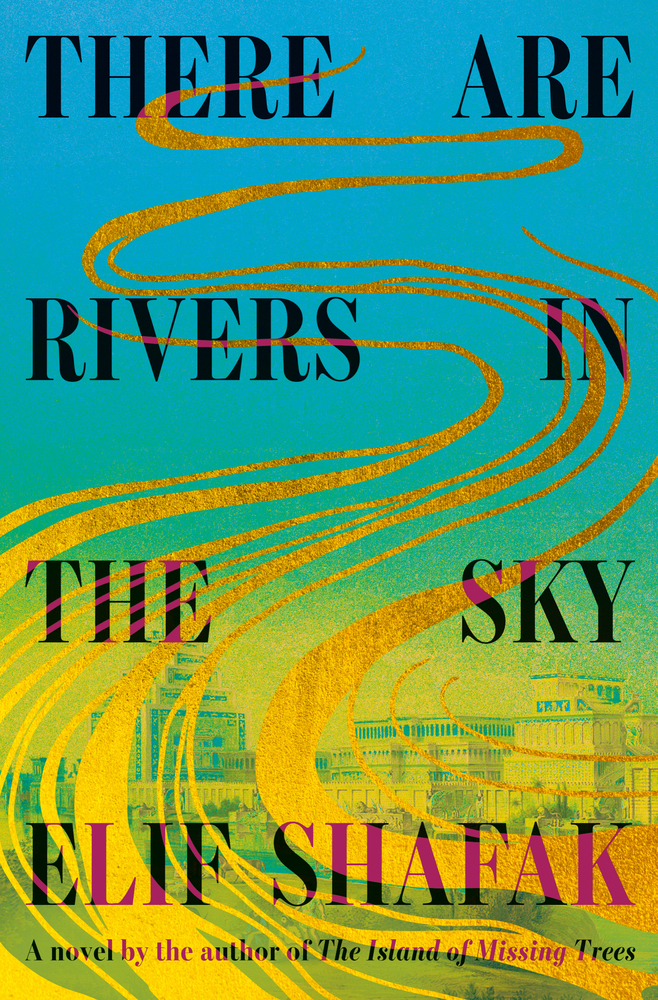
It’s hard to know where to begin talking about this book. Its breath is massive. It is the story of three characters, two rivers, the Tigris and Thames, and an ancient poem. And beneath it all, it connects us all through a single drop of water.
Where else can you find a story that begins in an ancient kingdom, threads through to a London of the 1800s and winds up in recent times? The themes naturally connect our history and knowledge of water as the source of all life with power, class systems, religious war, family issues and, of course, the environment.
The story opens in Ninevah, the ancient city on the banks of the Tigris River. King Ashurbanipal is a ruthless leader facing a battle that may crush his kingdom. As destructive as he was, he was interested in leaving a cultural legacy. He built a great library that was believed to have been totally destroyed. The Epic of Gilgamesh, a poem believed to have been lost in the library’s destruction. is what binds together the lives of the novel’s three protagonists.
Arthur (referred to in his chapter headings as King Arthur of the Sewers and Slums) is born on the banks of a polluted Thames in 19th century London. His mother is mentally ill, his father an abusive drunk. But Arthur is born with a brilliant mind and infallible memory. This gift changes his life. He apprentices first at the British Museum and then at a renowned publishing company. Once he finds the remnants of the book, Ninevah and Its Remains, the course of his life is set.
Narin’s story begins in 2014. She is a 10-year old Yazidi girl, born in Turkey. with a rare disorder that will result in deafness. Narin is the last in the line of Yazidi healers. She is raised by a grandmother who cannot prevent her oncoming deafness but teaches her Yazidi history and knowledge through stories. Yazidi life along the Tigris is being destroyed to make way for a new dam. Narin’s grandmother decides they will go to Iraq for her baptism in a sacred temple as Yazidis have done through time. Unbeknownst to them, Isis is rising in Iraq and another genocide is about to befall this beleaguered people.
The last character is a contemporary woman. It is 2018. Zaleekah a hydrologist and newly separated, moves into a houseboat on the Thames. Her backstory is a sad one. Her parents were killed in a flash flood when she was seven and she was raised by a wealthy uncle. She is deeply depressed and is contemplating suicide when we meet her. But all of that is about to change…
I was immersed in the stories of each character, particularly Arthur. His assent from impoverished to renowned is fascinating. As was the interwoven history. I could not imagine how or if these stories would eventually intersect. But it does in the hands of this brilliant writer. The prose itself is spellbinding but more importantly, I came away from the novel with a better understanding of our environmental abyss and how we are all connected by a single drop of water.

This is the third novel I’ve read of the thirteen she has written. They were Island of the Missing Trees and Forty Rules of Love. Each of the three were very different but wonderful stories in their own way. It is not surprising that her work has been translated into 55 languages. She is Turkish born but, because of her outspoken criticism of the Turkish government and the politically charged nature of her books, has emigrated to England. Although her books may be written in English, the melodic cadence of middle Eastern writers can be found on every page.
This is a complex and memorable story in the hands of a writer up to this daunting challenge.
Highly recommend.,
 Reader’s Cafe