
The PostCard
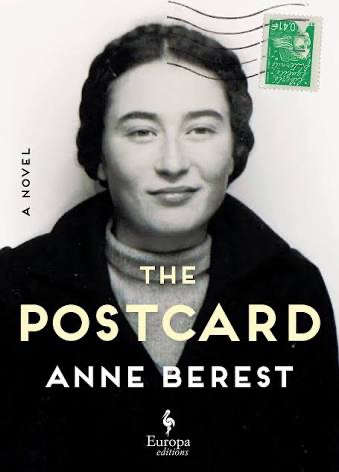
Choix Goncourt Prize winner
Literary Peace Prize for Fiction 2024
Jewish Quarterly Wingate Prize
I am, unfortunately, very familiar with stories of the Holocaust. My brother in law’s parents lived in the Warsaw ghetto. They survived but lost a son. Their emotional scarring was deep. A neighbor, Hannah, who became a close family friend was at Buchenwald. She and her sister had been teens and were subjects of experimentation. She was ill her whole life and suffered the consequence of imprisonment long after. I remember her having to have three toes removed years later because of the frostbite she suffered then. The physical effects were there but the psychological impact showed itself in idiosyncratic ways.
That being said, reading this book reawakened in me knowledge of the long reach into the lives of survivors’ perpetual mourning for the lost. Complicating my feelings of that time in history is that gnawing fear that our inhumanity is making a very strong comeback. The images of the carnage at the Israeli music festival, the destruction of the people of Gaza, the hell of the Ukraine war. Among many others. And then here at home, the images of immigrants being grabbed off the street, shackled with shaved heads and sent anonymously to a prison in another country because they are Venezuelan is right out of the Nazi playbook.
This long way into a review of this book sets the stage for my state of mind when reading it. The way it’s told is as much about the people who let the atrocities happen as those who suffered.
This is not a perfect book. It is categorized as a novel but reads like a memoir. Berest calls it a true novel. You could say it is a melange of memoir, biography, history, and fiction. Suffice it to say, it is based on Anne Berest’s family history. I found the structure a bit odd and the abrupt changes in time and place unsettling but what she does so well is to fully plant the reader into the lives of this family.
The story is set in motion by an anonymous postcard. On the front is a photo of the Opera Garnier in Paris; on the back are the names of Anne’s maternal great grandparents—Ephraim and Emma—and their two children, Noemi and Jacques. All four had been killed at Auschwitz.
Fifteen years after the postcard was sent, Anne rediscovers it. Her interest is precipated by an uncomfortable encounter at the first seder she’s ever attended (new boyfriend) and an antisemitic jab lodged at her daughter. She then becomes relentless in trying to find out who sent it and why.

Anne draws on an array of helpers on her quest. A private detective, a handwriting expert, family, and most of all her reluctant archivist mother, Lelia, all contribute. The search takes Anne back to the beginning of the Rabinovitch family’s wandering to find a home. Their flight from Russia after the revolution, Latvia, Poland, Palestine and finally France.
Ephraim moved them from Paris to a small village and works diligently to mold himself into the perfect Frenchman in order to gain citizenship. But he is repeatedly denied. His life was marked by lack of acceptance wherever he lived. However, until the night two of his three children are taken, he remains hopeful. And even then, he carries on as her always did, following all the rules, until they came for him.
Different sections of the book piece together the story from past to present. We learn about Myriam, the oldest daughter who averted arrest, was married and living in Paris. Her husband’s family were established as Parisian artists and resistance fighters. Myriam spent the war in hiding, in resisting, and afterwards in the futile search for her family.
As in many Holocaust families, silence prevailed. Myriam never spoke of her trauma. Her daughter knew nothing. Judaism played no part in the family’s lives. The search is not an easy one. Anne’s mother is reluctant, afraid, perhaps of what she might learn.
The parts of the book that most affected me was both the collusion and acceptance of what was happening. We knew neighbors betrayed neighbors. We knew how people thought nothing of taking over apartments belonging to the people who were taken. All of that is true here. It is the specificity that is so heartbreaking and unfathomable.
Parisians were offended by the sight and smell of the returning prisoners. There had been outcries from the French about immigrants. This all resonates with much of our contemporary world.
Stick with all the meandering to take in the whole story. No matter how difficult this is to read.
A number of years ago, I spent some time in Paris. I had an apartment in the third arrondisement, the Marais. It had been the old Jewish quarter. There was a school I passed everyday on my way to the metro that had a plaque as part of their je nous oublions jamais project, plaques all over Paris saying they will never forget. The school had been a holding place before Jews were sent to the Velodrome D’Hiver to await deportation to the camps. I remember feeling cold whenever I passed the school. The streets of the Marais are winding and narrow, the buildings tightly packed. I had a feeling I’d never had before. The feeling of being trapped. I felt fear. The chill was fleeting. But for how many does it never disappear?
This is a story of the past we have been told will never be forgotten. Maybe it will always be a footnote of human disintegration and misery. But the reason we are never to forget is so that it doesn’t happen again. The truth of the matter is it is happening. The demonizing. The othering. The silencing.
We are coming to another Passover. At the seder, we retell the story of the flight to freedom. The escape to a place where we will once again be immigrants, hopeful that a different life will be a better one. If only we could look at the contemporary version of the story and shred whatever hatred we have for one another just because they are not us.
 Reader’s Cafe