
There have been many novels recently written about the Holocaust—its devastation, its unimaginable cruelty, its heroes, its far-reaching effects into the future. And unfortunately, many of the tropes of those times resonate in our world right now.
I try not to read them. Family members who survived are each heroes to me in their own way and their lives were forever shaped by what they experienced. In its way, this novel demonstrates this.
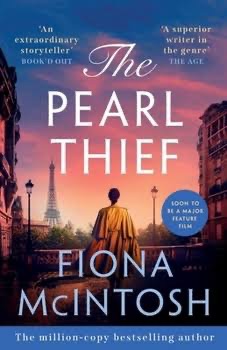
It is a story about a woman who may have survived the war but lives with survivor guilt and a wariness of people. In the plot line of this story, she has every reason to feel this way. Suffice it to say, it was not the mystery I expected from the title.
There are two time periods in the book—the 1960s, a time when art stolen by the Nazis began to resurface and its provenance warranted investigation and the 1930s and 40s Nazi invasion and occupation of Czechoslovakia.
The protagonist, Katerina, uses the alias Severine. It is 1963. She works as a specialist in antique jewelry for the Louvre and has been temporarily assigned to the British Museum to assess the authenticity of newly acquired artifacts. One such item is a Byzantine pearl necklace she immediately recognizes as a family heirloom. Up until now, Severine presents herself as a poised, sophisticated but unknowable woman, aloof and in control. This upends Severine’s carefully constructed life. Her revelation of their provenance jump starts the story.
Severine flees London and goes back to Paris where she is approached by a man, Daniel, who has been watching her. He befriends this normally stand-offish, closed up woman and convinces her she needs to tell him her story. She finally feels compelled to speak it aloud. The reader knows something is suspicious about this man but we don’t know what until much later.
Katerina/Severine is a multilayered character. She has survived what seems impossible and reinvented herself. Everything she does is thought through with care down to the detail of her meticulously chosen clothing. The story of her life as a child from a well to do Jewish family in Prague unfolds in great detail. You can’t help but live her childhood with her, her relationship with her father, her harrowing escape from death at the hands of a childhood neighbor who became a Nazi officer.
She is certain that this evil man, Ruda Mayek, is the person behind the pearls stolen from her family. She assumes he wants the British Museum to validate the authenticity as a way of finding her and killing the girl who got away.
It is a story of courage, friendship, love and healing. Katerina is a resilient woman who has survived the unimaginable. But she is layered and shows an undaunted belief that she can take care of herself. When others come through for her, it breaks her reserve and allows her to live a full life.
The details about the war are well researched as are all the historical facts Katerina shared with us along the way. The author’s note and acknowledgements are worth reading. The supporting characters—Daniel, Edward, Otto, her father—are all richly drawn.
The only negative thing about the book for me was the way telling her story to Daniel was structured. It seemed unnatural for this closely guarded woman to sit and tell a stranger what she has never told anyone else. It felt like it was written separately and inserted whole. I also didn’t feel Daniel gave her enough to open herself like that. It was an important part of the book and her story needed to be told but I think there may have been other ways to tell it.

I was amazed to read the extensive list of this author’s books. I had not come across her before. If her other books are anything like this one, she has a new reader.
Highly recommend.
 Reader’s Cafe