
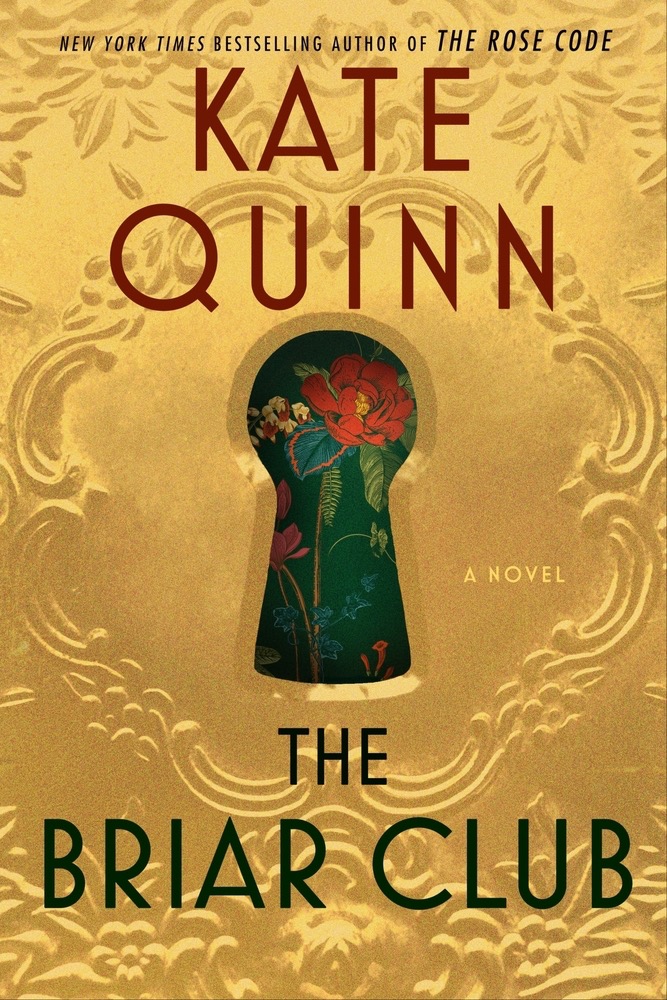
The Briar Club is a Washington D.C boarding house. It is the early 1950s. It is a shabby, unpleasant place to live principally because of the woman who runs it. Mrs. Nilson is a mean spirited tyrant with restrictive rules, mirroring the tension of the times. But the women who live there have few choices so they accept her terms.
The rooms are shabby, have few amenities, and the tenants engage in little to no socializing. That is, until Grace March, a mysterious, yet kind, woman moves into the tiny attic room. She changes the tenor of the place.
With Grace’s arrival, the one night everyone can breathe a sigh of relief is on Thursdays when Mrs. Nilson leaves the house to play bridge. Grace begins hosting gatherings in her room. The tenants take turns cooking a meal on a hot plate and drink the alcohol infused sun tea Grace serves.The odd assortment of women boarders who never bothered with each other become connected into family (with one exception).
But let me back up a bit. The book is structured from the multiple characters point of view which also includes narration from the perspective of the house itself. The story opens as the house tells us there has been a murder in Grace’s room. We don’t know who, what or why as we delve into the stories of the people who live in the house—who they are, what brought them to Washington and which of them might be capable of murder.
I am not a fan of the many books that alternate points of view. The back and forth tends to pull me out of the story. But this is a bit different. One by one, we take a deep dive into the lives of each of the boarders. The women come with varying backgrounds and baggage. Their desires, plans, inner most emotions, along with the pressure to escape the lives planned for them. is threaded through each narrative.
Nora, with her Irish lilt and fashion sense, works at the National Archives with goals to move up the ladder. She has a deep respect for its purpose. Coming from a family of corrupt policemen who expect her to support their gambling debts and babysit their babies, she wants nothing to do with them or that life. However, she caught the eye of a gangster who fell in love with her thus bringing conflict into Nora’s new life.
Fliss is an English nurse who married a military doctor now stationed in Japan during the Korean War. Fliss boards there with their baby, Angela. She puts on a cheerful face but suffers from baby blues and a sense of isolation and despair.
Bea played ball in the National Women’s Baseball league before an injury sidelined her. Baseball is her life. She is heartbroken, and tries to piece work together to support herself, and find a way back to baseball.
Rekha is an older woman who immigrated from Hungary. She was a professor and artist, now a widow eaten up by her losses. She had valuable art work stolen from her as collateral for entering this country. She knows who and where the man who stole it lives and is driven to claim what is rightfully hers. In her former life, she was a professor. Now, she shelves books in the library.
Claire, having suffered immeasurable losses during the Depression, dreams of buying her own house outright so no one can take it from her. She will do anything to make money to achieve that dream.
Arlene is a mean-spirited husband hunter who doesn’t understand why she is so unlikeable.
Woven throughout is the landlady’s children, Pete and Lena, as they interact with the boarders. They are verbally abused in much in the same way as the tenants, and their landlady mother forces Pete to drop out of high school in order to be the handyman.
Other interesting characters added to the mix: an FBI agent who becomes involved with two of the women, a jazz musician, Nora’s gangster, Xavier, and a politician’s wife. There were also historical facts interspersed I was unaware of that I found fascinating, if not a bit disturbing.
Throughout the book, Grace is a confidante, helpmate, sister to the other women but they know nothing about her until the very end. It is worth the wait.
There has been some criticism that Ms. Quinn threw too many issues into the book. Racism, sexism, prejudice and lack of gay rights, the fear promulgated by McCarthy’s witch hunt, domestic violence, fertility and reproductive rights, post partum depression, PTSD. I didn’t find it so. The experiences these women confronted were real issues of the time and resonate now. There is more interesting background in the author notes and interview at the end of the book.

I loved the book and was sorry to leave all these characters. I doubt there will be any kind of sequel but I’ll be first in line if there is.
This is the second book I’ve read of Ms. Quinn’s outside of her World War II sagas. The other was cowritten with Janie Chang. The Phoenix Crown, set at the time of the San Francisco earthquakes an interesting story but not as memorable as this one.
Highly recommend. Five stars.
 Reader’s Cafe