Friendship and Feminism: The Book Club for Troublesome Women
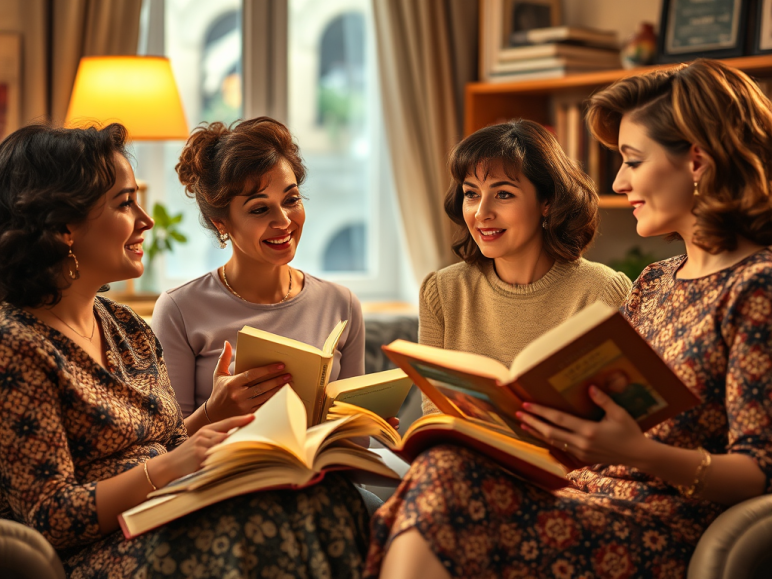
The fact that history repeats itself is never more obvious than when reading historical fiction. This book, The Book Club for Troublesome Women depicts the wives of 1960s middle class families and the societal pressure to keep women at home. This was a time period when women were discouraged from pursuing careers or stimulation outside of their families. Fifty years later, these regressive ideas are gaining momentum once again in the form of misguided restrictive laws based on false memory about how good this was for women.

The Emotional Depth of Historical Fiction in Ann Hood’s The Stolen Child

The Stolen Child is a beautiful story of regret, forgiveness, and the pursuit of dreams.

Kate Quinn’s The Briar Club: A Novel of Women’s Lives during the Red Scare

This novel is set in a time not yet popularized in historical novels. Kate Quinn, best known for her World War II novels, The Alice Network, The Rose Code and The Huntress, ventures into the McCarthy years in this intriguing novel. It is the time of the Red Scare, when people are losing jobs, fear for their safety, and face loss of reputation for their ideas and associations.

A Dual Narrative Journey

There were many projects developed for young artists to keep them going under during the Depression. The WPA (Works Progress Administration) and the Federal Art Project (FAP) were created to keep struggling artists working. Artists that eventually came into their own such as Jackson Pollack, Willem DeKooning, Mark Rothko, and Dorothea Lange were kept afloat during this period. They were charged with creating work for public spaces. In this story, a young woman artist entered a contest to paint a mural for her local post office in New Jersey but need meant shifts and she was sent to a town she’d never heard of—Edenton, North Carolina—to paint their post office mural.

The Pearl Thief by Fiona McIntosh

There have been many novels recently written about the Holocaust—its devastation, its unimaginable cruelty, its heroes, its far-reaching effects into the future. And unfortunately, many of the tropes of those times resonate in our world right now. I try not to read them. Family members who survived are each heroes to me in their own way and their lives were forever shaped by what they experienced. In its way, this novel demonstrates this.

A Tale of Immigrant Resilience

Newly released this week, this novel is a throwback to the kind of novel that made me an avid reader. It’s a Barbara Taylor Bradford Woman of Substance kind of book. The undaunted heroine rises from meager circumstances. With talent, grit, and ambition, she faces many obstacles but becomes successful and climbs the rungs of society. This is not a criticism. It is a reflection of the circumstances in the early twentieth century and Maisie McIntyre is such a character.

The Long Reach into the Past

The narrative explores the haunting legacy of the Holocaust through Anne Berest's discovery of an ancestral postcard, initiating her search for family history. The text reflects on personal trauma, societal complicity in atrocities, and contemporary parallels of inhumanity, urging remembrance to prevent repeating the past while confronting present-day prejudices.

Everything We Never Had, A Story of Fathers and Sons

This beautifully crafted novel was written for a young adult audience but I would recommend it for teens and adults alike.Long listed for the National Book Award it is the tale of four generations of Filipino Americans grappling with identity, past trauma and the long reach it has into the future.

Slipping into the Past

This book is not an easy read. If I had read it a couple of years ago, I would have been reminded of how far we've come from the days of back alley abortions, substandard reproductive health care and forced adoptions. Although abortion laws in Canada are still in place, we have taken a giant leap backward with the Dobbs decision overturning Roe. It changes what should have been a historical perspective into a frightening look at where we are heading. I would say this book may now be categorized as historical fiction but if we stay on the current trajectory, it will read as a contemporary novel.

Our Haunted Past Comes Full Circle

The main protagonist, Jane Flanagan, had a troubled childhood dominated by a single alcoholic mother, and a sister she doesn’t connect to. But she has seemingly risen above it to become an archivist at the Schlesinger Library at Harvard. Residual behaviors, unacknowledged yet ever present, rear their ugly heads at a time when all should have been well. She engages in behavior that may cost her both her ascending career and marriage.